
Lewis County Criminal Records
A criminal court record is the court-maintained case file, not the law-enforcement incident file. In Lewis County, misdemeanor criminal cases are heard in the Magistrate Division of the District Court. Felonies begin with magistrate first appearances and preliminary hearings. If probable cause is found, the felony moves to District Court for trial, plea, sentencing, or other final action. The same local courthouse record path matters at each stage because the Clerk of the District Court keeps the Register of Actions and related court records.
Criminal court records can include charging documents, arrest or summons information, bond conditions, arraignment, plea, motions, trial settings, disposition, sentencing, probation, and financial obligations. The charges themselves are only one part of the case file. A later entry may show that a charge was reduced, amended, dismissed, or resolved by plea or trial. For a closer look at the arrest-to-charge pathway, use Lewis County arrest records and court charges; for all case types, use Lewis County court records.
The Lewis County Prosecutor page connects formal charging decisions with the court case that follows.
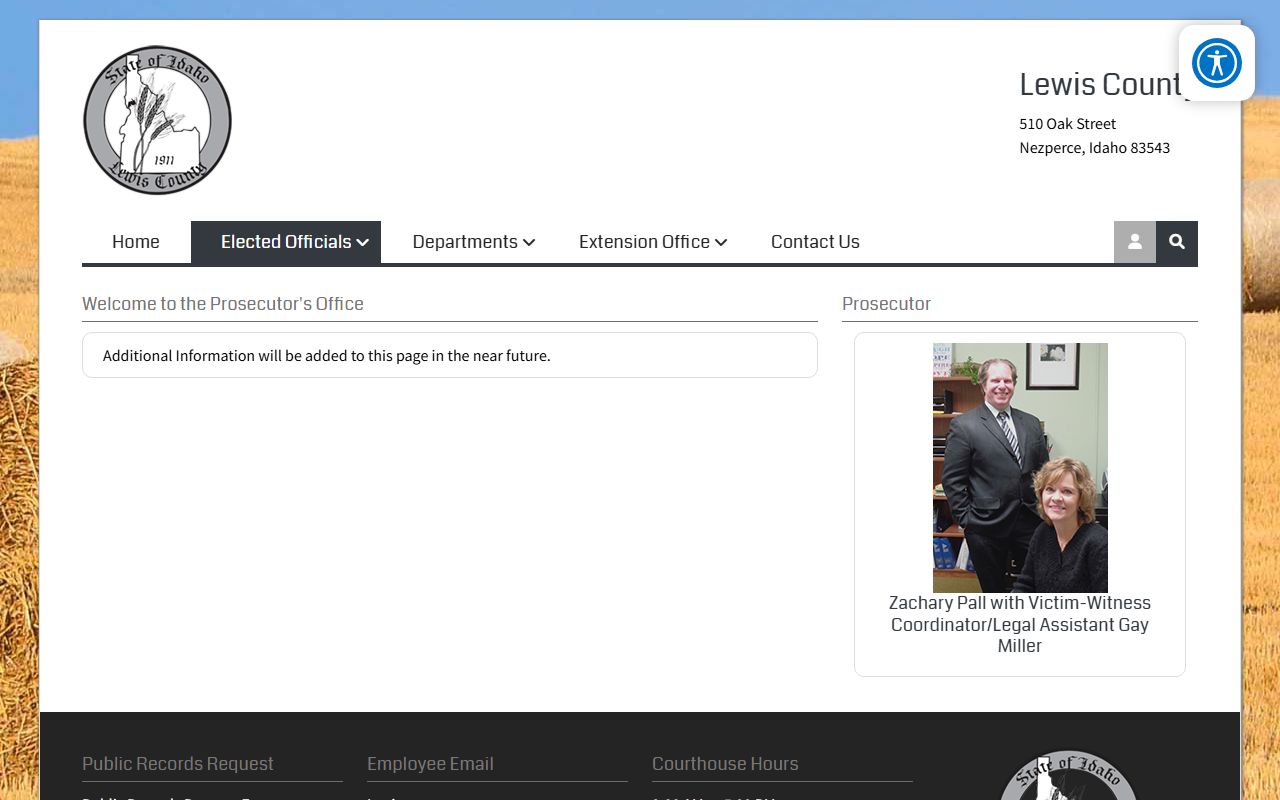
The court record still remains the clerk's case file, even when the charging decision starts outside the clerk's office.
Search Lewis County Criminal Cases
Lewis County criminal court records are searched through the Idaho iCourt Portal. Smart Search can locate case information by case number or party name. Search Hearings can locate court dates. Once the case is open, the Other Events and Hearings area can show arraignments, motions, plea settings, trial dates, dispositions, sentence events, and other entries in the case timeline.
- Open iCourt and choose Smart Search for the criminal case record.
- Enter the case number if known. If not, search by the defendant's name and compare court and case type.
- Open the Lewis County result and review the event history for arraignment, motions, plea, trial, and disposition entries.
- Check whether the charge list has changed, because an amended or dismissed charge may remain in the record history.
- Ask the Lewis County District Court clerk for a certified copy or a document that is not visible online.
Statewide criminal-history information is a different product from a local court case file. Idaho Code section 67-3004 controls dissemination of criminal history records, while iCourt shows court case information and docket events. A criminal-history record may summarize convictions or law-enforcement history. A Lewis County criminal court record shows the court case as it moved through the Magistrate Division or District Court.
Criminal Case Stages
Criminal court records should be read in sequence. A felony may begin in front of a magistrate, then move to District Court after a preliminary hearing. A misdemeanor may stay in the Magistrate Division. The docket can show each stage as a separate event, so a single search result may contain filings, hearings, orders, plea changes, and sentencing entries that do not all carry the same legal weight.
Case flow: Charges Filed › First Appearance › Arraignment › Pretrial / Motions › Plea or Trial › Disposition › Sentencing
| Stage | What Happens |
|---|---|
| First Appearance | The defendant appears before the court, and release, bond, counsel, and next settings may be addressed. |
| Preliminary Hearing | In felony matters, a magistrate screens whether probable cause supports moving the case forward. |
| Arraignment | The charge is addressed in court, and the defendant enters a plea such as guilty or not guilty. |
| Pretrial / Motions | Parties file requests for court action, and the judge enters orders on procedure, evidence, or scheduling. |
| Plea or Trial | The case resolves by plea, bench trial, jury trial, acquittal, dismissal, or another court-approved outcome. |
| Sentencing | The court enters punishment or conditions after conviction, including jail, prison, probation, fines, costs, or restitution. |
What Criminal Records Show
Idaho Court Administrative Rule 31 requires civil and criminal actions to be recorded in a Register of Actions. For a Lewis County criminal case, the record can show the court, case number, defendant, state as prosecuting party, charge text, statute, severity, amendment or dismissal history, hearings, plea, disposition, sentence, probation, bond, financial obligations, and document entries. Not all fields appear for every public user.
| Field | What It Shows |
|---|---|
| Case Number | The record number used by Idaho courts and iCourt to identify the criminal matter. |
| Defendant | The person accused in the criminal case, subject to redaction rules for restricted records. |
| Court | Lewis County District Court or the Magistrate Division within Idaho's Second Judicial District. |
| Charges | Alleged offenses, statutory references, severity, and later amendment, reduction, dismissal, or disposition. |
| Plea | The defendant's response, such as guilty, not guilty, or another plea recognized by the court. |
| Motions and Orders | Requests by the parties and written directions from the judge. |
| Disposition | The outcome of the case or charge, including conviction, acquittal, dismissal, or other resolution. |
| Sentence | Court-ordered consequences such as jail, prison, probation, fine, cost, restitution, or other terms. |
The Idaho law-enforcement exemption statute is relevant because court records and investigative records do not always have the same public access status.
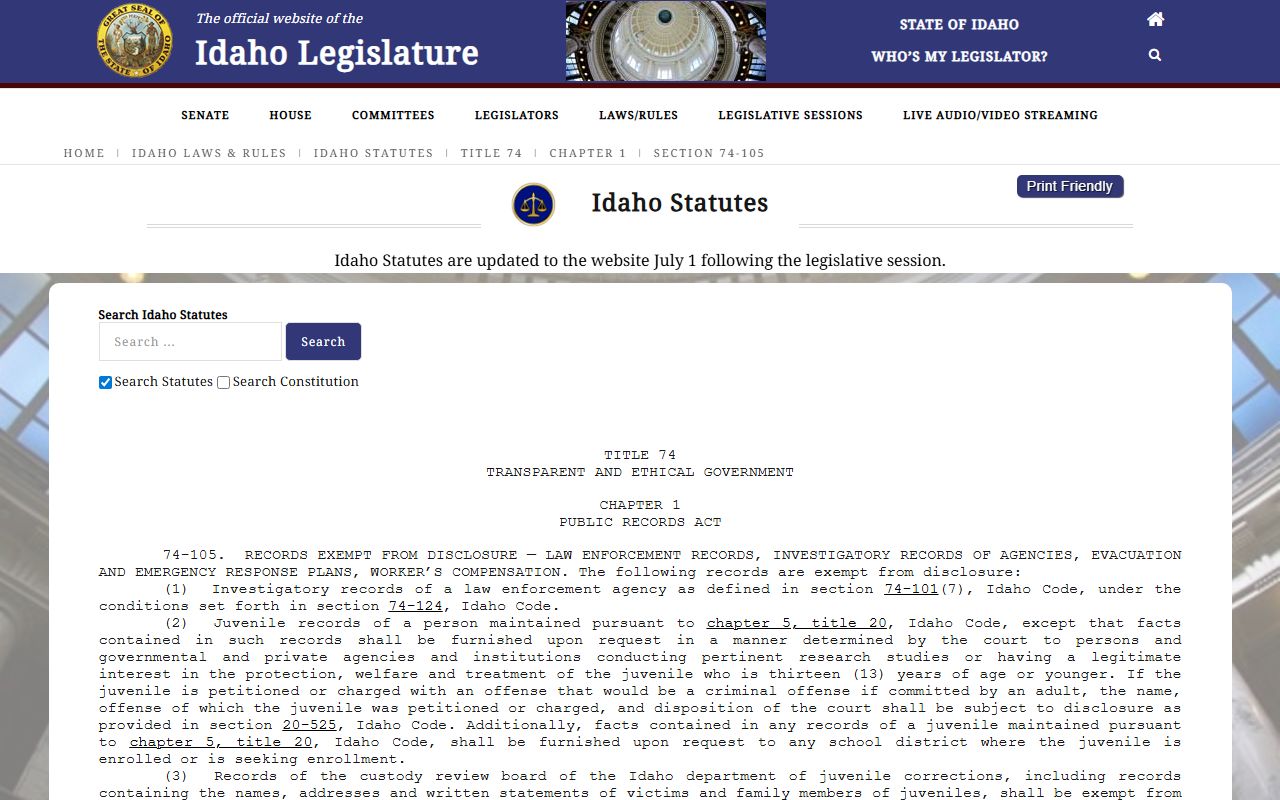
A criminal case file may be open in court while a separate police report or investigatory record remains exempt or redacted.
Charges vs Convictions
A charge is an accusation filed in court. A conviction is a finding or plea of guilt. A Lewis County criminal court record can show charges that were filed but later dismissed, amended, reduced, or resolved by acquittal. That is why the disposition field is essential. It tells whether a charge became a conviction, was dismissed, or ended another way.
| Charge | Conviction | |
|---|---|---|
| Meaning | An allegation filed in court. | A finding or plea of guilt. |
| Record Stage | Appears early in the criminal case. | Appears after plea, trial, or other final action. |
| Can Change | May be amended, reduced, added, or dismissed. | May be followed by sentence, probation, or relief proceedings. |
| How to Read | Check charge status and docket history. | Check disposition and sentence entries. |
Note: A public charge entry is not proof of guilt unless the record also shows a conviction or guilty plea.
Dispositions and Sentences
Disposition is the outcome of the case or charge. In a Lewis County criminal court record, the disposition may show guilty, not guilty, dismissed, acquitted, amended, or another court result. A sentence is the consequence after conviction. It may include jail, prison, probation, fines, costs, restitution, treatment terms, no-contact conditions, or financial obligations. The docket may separate disposition and sentence into different dates, especially if sentencing occurs after a plea or verdict.
Idaho records also require care with withheld judgment and shielding language. Withheld judgment dismissal relief under Idaho Code section 19-2604 is different from broad erasure. Clean Slate shielding under Idaho Code section 67-3004 prevents public disclosure for eligible records after statutory conditions are met, but it does not destroy the record. Courts, law enforcement, prosecutors, and the defendant may retain access in official or allowed contexts.
The Idaho criminal-history dissemination statute affects criminal-history access and shielding outside the local court docket.
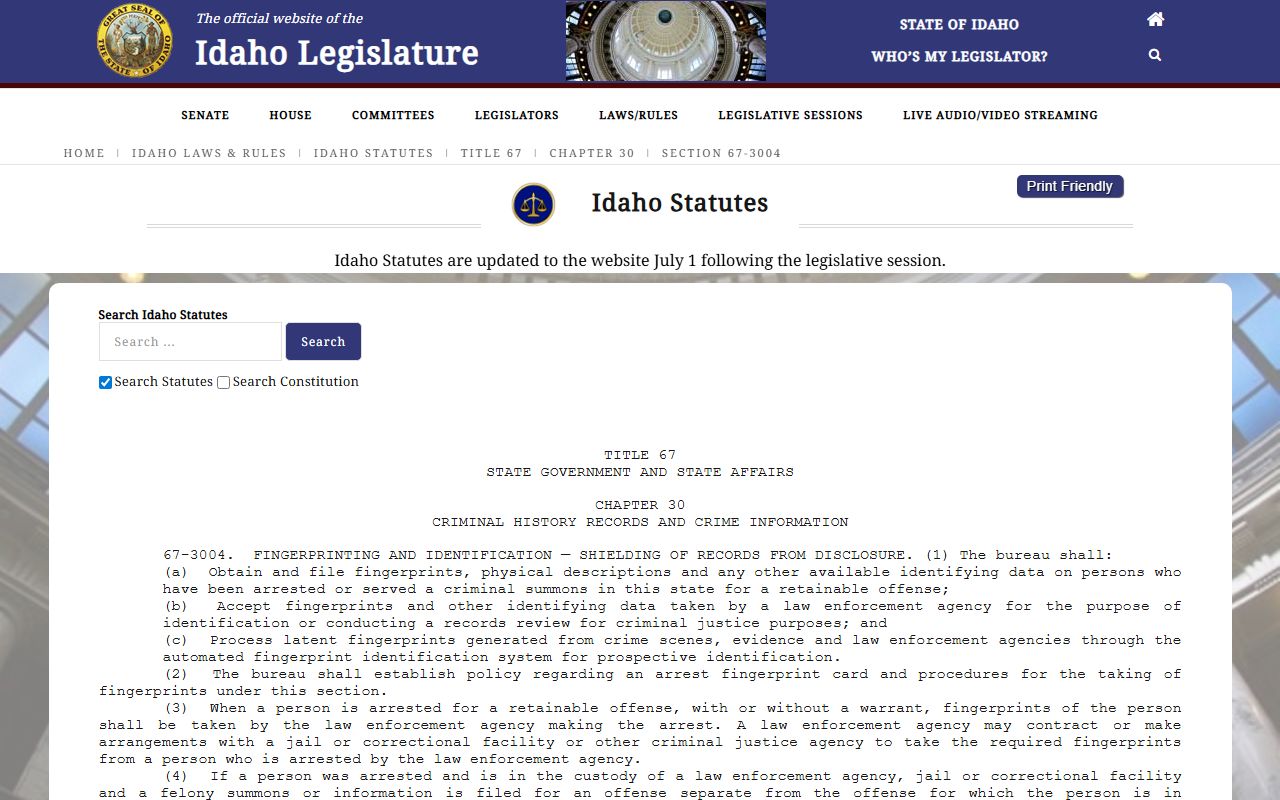
Use the statute as a criminal-history access reference, while using iCourt and the clerk for the Lewis County case file.
Sealed vs Expunged
Restricted records need precise terms. Sealed means hidden from public view by rule or court order. Shielded, in Idaho's Clean Slate context, means the record is not destroyed but is prevented from public disclosure. Expungement means removal or destruction only where Idaho law authorizes it, and Idaho does not broadly erase most convictions. Juvenile records, mental health records, and sensitive personal details can also be restricted under court rules and confidentiality statutes.
| Sealed | Shielded or Expunged | |
|---|---|---|
| Visibility | Hidden from ordinary public access. | Shielded records are blocked from public disclosure; expungement applies only where law allows removal or destruction. |
| Idaho Use | Used for juvenile, confidential, sealed, or rule-restricted files. | Clean Slate shielding is the main public-facing remedy for eligible criminal records. |
| Access Left | May remain available to court staff, parties, or authorized users. | Shielded records remain available to the defendant, court staff, law enforcement, and prosecutors in official contexts. |
| Lewis County Path | Ask the court that handled the case about any petition or access procedure. | File eligible Clean Slate requests with the court that handled the case. |
The Idaho confidentiality exemption statute supports redactions for private personal data referenced in Lewis County records practice.
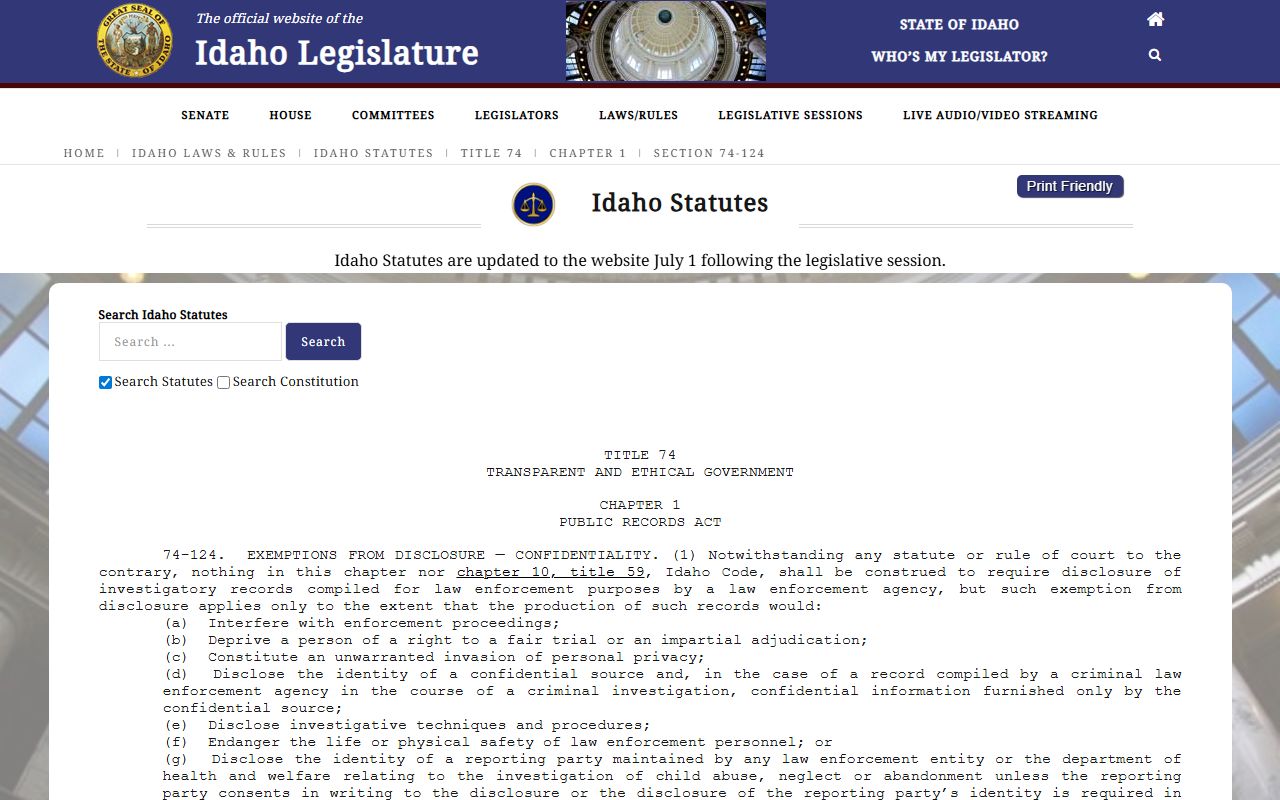
Confidentiality rules explain why a public criminal docket can be visible while some personal data is removed.
Criminal Record Access Rules
Idaho Court Administrative Rule 32 governs access to Idaho judicial records, including criminal case records, and controls over general public-record law when the two conflict. Rule 31 requires the clerk to keep civil and criminal registers of actions. Idaho Code section 74-102 sets the general public-records presumption for agency records, while Title 74 exemptions protect certain law-enforcement, investigatory, confidential, and personal data. For Lewis County, that means the same incident may produce several records with different access rules: the court case, the prosecutor file, the sheriff report, and a statewide criminal-history record.
Key access rules:
Idaho Court Administrative Rules 31 and 32 control registers of actions and access to Idaho judicial records.
Idaho Code section 74-102 provides the general right to inspect public records unless an exemption applies.
Idaho Code section 74-105 protects some law-enforcement and investigatory records from disclosure.
Federal Criminal Records
Federal criminal records are not Lewis County District Court records. They are filed in the U.S. District Court for the District of Idaho and accessed through federal systems such as PACER or the federal clerk's office. A Lewis County resident, event, or defendant name can appear in federal court, but that does not make the case part of the Lewis County Magistrate Division or District Court docket.
The U.S. Attorney's Office for the District of Idaho is the federal criminal justice reference, separate from Lewis County state court records.
Use federal sources only for federal prosecutions. State criminal court records for Lewis County remain with Idaho iCourt and the local clerk.